
Jack Botanicals Premium Kratom
The kratom brand serious enthusiasts rely on for purity and potency
🔓 UNLOCK YOUR EXCLUSIVE DISCOUNT
JACK30
= 30% OFF Everything
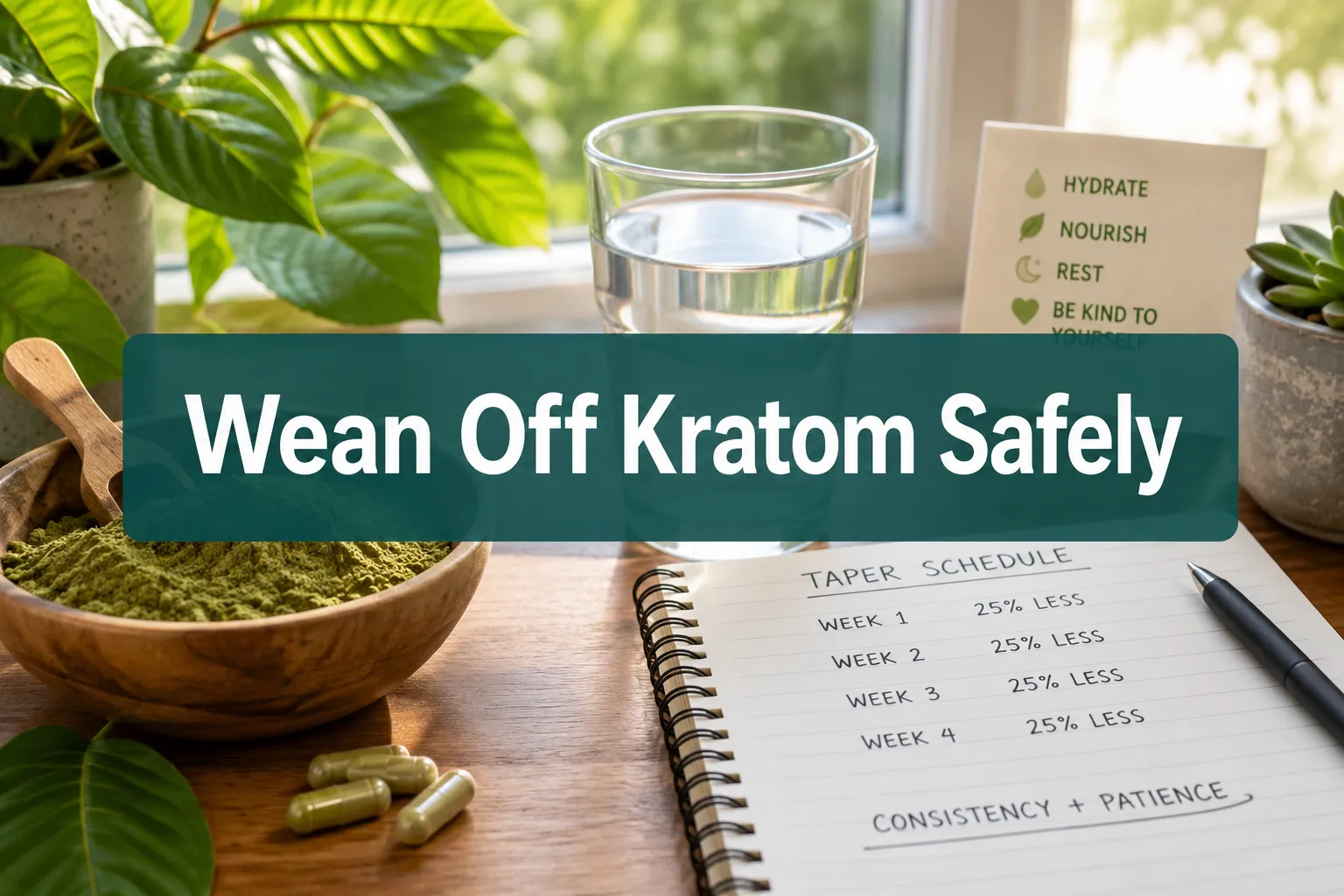
To ween off kratom safely, reduce your daily dose by 10% to 20% every 5 to 7 days rather than stopping abruptly. This gradual taper minimizes withdrawal symptoms, which typically peak within 24 to 72 hours of the last dose and resolve within 1 to 2 weeks for most users. Medical supervision is recommended for heavy or long-term users.
- A slow taper of 10% dose reduction per week is the most widely recommended method to ween off kratom safely
- Cold turkey cessation is possible but produces more intense withdrawal symptoms, especially for users taking over 15 grams daily
- Withdrawal symptoms include muscle aches, insomnia, anxiety, nausea, and irritability, they are uncomfortable but rarely medically dangerous for otherwise healthy adults
- Kratom withdrawal is shorter in duration than classical opioid withdrawal but shares several overlapping symptoms
- Supplements such as magnesium, melatonin, and black seed oil are commonly reported to reduce discomfort during taper
- Clonidine and other medications can be prescribed off-label to manage acute withdrawal symptoms
- Users averaging 20 grams per day typically need 8 to 12 weeks for a complete, comfortable taper
- Switching to a lower-alkaloid strain during the final taper stages is a strategy some users report as effective
- Tracking dose, batch ID, and alkaloid content helps maintain consistency during a taper, inconsistent product potency is a common cause of failed tapers
- Professional support significantly improves long-term success rates

What Is Kratom Withdrawal Like
Kratom withdrawal produces a recognizable cluster of physical and psychological symptoms. Most users describe it as similar to a moderate flu combined with restless legs and anxiety. The experience varies significantly based on daily dose, duration of use, and individual physiology [8].
Common physical symptoms:
- Muscle aches and joint pain
- Sweating and chills
- Nausea, vomiting, and diarrhea
- Runny nose and yawning
- Insomnia and restless legs
Common psychological symptoms:
- Anxiety and irritability
- Depression and low motivation
- Difficulty concentrating
- Drug cravings
Lab reports show that kratom’s primary alkaloids, mitragynine and 7-hydroxymitragynine, act on opioid receptors, which explains why the withdrawal profile overlaps with opioid discontinuation syndrome [9]. Users are reporting that psychological symptoms, particularly anxiety and low mood, often persist longer than physical symptoms, sometimes for 2 to 4 weeks after the last dose [8].
Worth noting: severity correlates strongly with daily dose and duration of use. Someone using 5 grams per day for 3 months will have a substantially different experience than someone using 25 grams daily for 3 years [1].
Kratom Withdrawal Symptoms: How Long Do They Last
For most users, acute withdrawal symptoms begin within 12 to 24 hours of the last dose and peak around 48 to 72 hours. The acute phase typically resolves within 5 to 10 days [8].
Typical withdrawal timeline:
| Phase | Timing | Symptoms |
|---|---|---|
| Onset | 12-24 hours after last dose | Anxiety, yawning, cravings |
| Peak | 48-72 hours | Muscle aches, insomnia, nausea |
| Acute resolution | Days 5-10 | Symptoms fade gradually |
| Post-acute | Weeks 2-4 | Mood instability, low energy |
Multiple users report that post-acute withdrawal symptoms (PAWS), primarily low motivation and mild depression, can linger for 2 to 4 weeks, particularly after heavy, long-term use [8]. This is not yet fully characterized in clinical literature, but the pattern is consistent across user reports.
A proper taper compresses and softens this entire timeline. Users who taper correctly often report minimal acute symptoms at the final step-down [2].
Can You Quit Kratom Cold Turkey Or Do You Need To Taper
Cold turkey is possible, but it produces more intense withdrawal for most users. A taper is strongly preferred for anyone using more than 10 grams daily or using kratom for longer than 3 months [1].
Choose cold turkey if:
- Daily dose is under 5 grams
- Duration of use is under 4 weeks
- No history of severe withdrawal from any substance
Choose a taper if:
- Daily dose exceeds 10 grams
- Use has continued for more than 3 months
- Previous cold turkey attempts produced severe symptoms
- Co-occurring anxiety, depression, or chronic pain is present
According to testing data and clinical reports, cold turkey cessation from doses above 15 grams per day carries a meaningful risk of severe discomfort and relapse [5]. The taper approach exists precisely because it reduces that risk. Early results suggest that users who attempt cold turkey after heavy use relapse at significantly higher rates than those who follow a structured taper [4].
Best Kratom Tapering Schedule
The most widely cited approach is a 10% dose reduction every 5 to 7 days. This rate is slow enough to allow receptor adaptation without producing significant withdrawal at each step [2][4].
Standard taper for a user at 20 grams per day:
- Week 1-2: 20g → 18g (10% reduction)
- Week 3-4: 18g → 16g
- Week 5-6: 16g → 14g
- Week 7-8: 14g → 12g
- Week 9-10: 12g → 8g (larger cut when tolerance is lower)
- Week 11-12: 8g → 4g → 2g → 0g
Total estimated duration: 10 to 14 weeks [4].
For lighter users (5-10 grams per day):
A 20% reduction every 5 to 7 days is feasible, completing the taper in 4 to 6 weeks [2].
Key rules for any taper:
- Use a calibrated scale, eyeballing powder doses is not accurate enough
- Hold at a dose for an extra week if symptoms are significant before cutting further
- Do not skip steps to speed up the process
- Track batch IDs and lab dates if possible, inconsistent product potency is a documented cause of failed tapers [6]
For context on standard dosing ranges before starting a taper, the Kratom Dosage Guide 2026 provides verified reference data.
How Much Should You Reduce Kratom Each Day
The recommended daily reduction depends on starting dose and individual tolerance. The 10% weekly rule does not mean reducing every single day, it means reducing by 10% of the current dose once per week [3][4].
Practical breakdown:
- At 20g/day: reduce by 2g per week (not per day)
- At 10g/day: reduce by 1g per week
- At 5g/day: reduce by 0.5g per week
Some protocols suggest micro-tapering, reducing by a small fixed amount daily (e.g., 0.5g per day from a 20g baseline). This approach takes longer but produces very gradual symptom onset. Not yet verified as superior to weekly reductions in formal studies, but multiple users report it as more comfortable [2].
Based on lab results and user reports, the critical variable is consistency. Switching vendors or strains mid-taper introduces alkaloid variability that can destabilize the process. If a batch appears stronger than usual, reduce the gram amount further to keep alkaloid intake stable [6].
For users tracking their current usage frequency, How Often Can I Take Kratom covers safe use intervals that are relevant during the early taper stages.
How Long Does It Take To Taper Off Kratom
Taper duration depends directly on starting dose and reduction rate. As of today, the most commonly cited range is 4 to 16 weeks depending on use history [1][4].
Estimated taper durations by use level:
| Daily Use Level | Starting Dose | Estimated Taper Duration |
|---|---|---|
| Light | Under 5g | 3-5 weeks |
| Moderate | 5-15g | 6-10 weeks |
| Heavy | 15-25g | 10-14 weeks |
| Very heavy | Over 25g | 14-20 weeks (medical supervision advised) |
These are estimates. Individual variation is significant. Users with chronic pain conditions or anxiety disorders may need longer tapers because kratom has been managing those symptoms, stopping too fast reintroduces the underlying condition alongside withdrawal [3].
Early results suggest that users who rush the taper, trying to complete it in under 4 weeks from a heavy baseline, relapse at higher rates than those who extend the timeline [5].
Kratom Taper Duration Estimator
Kratom Withdrawal vs Opioid Withdrawal
Kratom withdrawal shares significant overlap with opioid withdrawal but is generally considered less severe and shorter in duration. This distinction matters for treatment planning [10].
Key differences:
- Duration: Kratom acute withdrawal typically resolves in 5 to 10 days. Heroin or fentanyl withdrawal can last 2 to 3 weeks acutely [10]
- Severity: Kratom withdrawal rarely requires emergency medical intervention in otherwise healthy adults. Full opioid withdrawal carries higher risk of dangerous dehydration and cardiovascular stress [10]
- Mechanism: Kratom’s primary alkaloid, mitragynine, has partial agonist activity at mu-opioid receptors. This is why the withdrawal profile overlaps but is less intense than full agonist opioids [9]
- PAWS: Both produce post-acute withdrawal, but kratom’s PAWS appears shorter on average [8]
Worth noting: users who have previously experienced opioid withdrawal often report kratom withdrawal as more manageable. However, for users with no prior withdrawal experience, kratom withdrawal can still feel severe. Comparing it to opioids does not mean it is trivial [10].
What Helps With Kratom Withdrawal Symptoms
Several non-prescription supplements and behavioral strategies have consistent user support for reducing withdrawal discomfort. Lab reports on these supplements do not confirm they alter kratom receptor dynamics, they address symptoms, not the underlying mechanism [2][6].
Commonly reported supplements:
- Magnesium glycinate: Reduces muscle cramps and improves sleep quality. Multiple users report 400-500mg before bed is effective
- Melatonin: Addresses insomnia during taper. 1-5mg at bedtime
- Black seed oil (Nigella sativa): Users are reporting reduced withdrawal intensity. Not yet verified in controlled studies
- L-theanine: Reduces anxiety without sedation. Typically 200mg twice daily
- Vitamin C: High-dose vitamin C has a long history of use in opioid withdrawal protocols. Some kratom users apply the same approach
Behavioral strategies:
- Light exercise, even walking, reduces anxiety and improves sleep
- Hot baths or showers reduce muscle aches
- Consistent sleep schedule, even if sleep quality is poor
- Caloric intake maintenance, appetite suppression is common during withdrawal
For users managing anxiety specifically, the Best Kratom For Anxiety guide provides context on why anxiety rebounds during taper and what strain characteristics contributed to anxiety relief.
Is There Medication To Help Quit Kratom
Yes. Several medications are used off-label to manage kratom withdrawal, and medical supervision significantly improves outcomes for heavy users [3][5].
Medications commonly used:
- Clonidine: An alpha-2 agonist that reduces autonomic symptoms, sweating, anxiety, elevated heart rate. Widely used in opioid withdrawal and applicable to kratom [3]
- Loperamide: Manages diarrhea. Available over the counter but should not be used in high doses
- Hydroxyzine or low-dose benzodiazepines: For acute anxiety and insomnia. Prescription only; short-term use only to avoid cross-dependence
- Buprenorphine: In cases of severe kratom dependence, some clinicians have used buprenorphine to stabilize patients before tapering. This is not standard practice and requires specialist involvement [3]
- NSAIDs (ibuprofen, naproxen): For muscle aches and general discomfort
Early results suggest that patients who receive medical supervision, even just a single consultation, complete their taper at higher rates than those who self-manage entirely [5]. If daily use exceeds 20 grams, a conversation with a primary care physician or addiction specialist is worth the time.
How To Manage Kratom Withdrawal At Home
Most users with moderate dependence can manage withdrawal at home with a structured plan. The key variables are preparation, tracking, and having a support person available [1][6].
Step-by-step home management plan:
- Calculate your baseline dose accurately. Use a calibrated scale for at least one week before starting the taper. Do not estimate.
- Choose a reduction rate. 10% per week for heavy users, 15-20% for lighter users.
- Stock supplies before starting. Magnesium, melatonin, electrolyte drinks, easy-to-digest food, heating pad.
- Set a fixed dosing schedule. Dose at the same time each day. Avoid dosing reactively to symptoms.
- Track every dose. Note gram amount, batch ID if available, and any symptoms. This data helps identify if product variability is causing problems.
- Hold at a dose if symptoms spike. Do not push through severe symptoms. Wait an extra week at the current dose.
- Plan the final steps carefully. The jump from 2g to 0g is often harder than earlier reductions. Some users extend the final phase over 2 to 3 weeks.
According to testing data, inconsistent product potency is one of the most common causes of failed home tapers [6]. If the alkaloid content of a batch is higher than expected, the effective dose is higher even if the gram weight is the same. Sourcing from vendors with current lab reports reduces this variable. The How To Stop Kratom Safely resource provides additional structured guidance for home-based cessation.
For users who want to understand how long kratom’s effects last at lower taper doses, How Long Does Kratom Last provides duration data relevant to dosing intervals during a taper.
Does Kratom Have Serious Withdrawal Risks
For otherwise healthy adults, kratom withdrawal is uncomfortable but not typically life-threatening. Serious risks are present in specific populations and circumstances [9][10].
Elevated risk situations:
- Users with cardiovascular conditions (elevated heart rate and blood pressure during withdrawal)
- Users with severe anxiety or panic disorder (psychological symptoms can be destabilizing)
- Users combining kratom with other substances, particularly benzodiazepines or alcohol
- Users with a history of seizures
- Pregnant users (requires immediate medical consultation)
Not yet verified as a significant risk for most users: Kratom withdrawal has not been associated with the severe dehydration risk seen in full opioid withdrawal for the majority of users. However, nausea and diarrhea can cause dehydration if not managed [8].
Based on lab results and clinical case reports, the risk profile is meaningfully different from classical opioid withdrawal. That said, dismissing kratom withdrawal as trivial is not accurate either, multiple users report it as the most difficult experience of their lives, particularly after years of heavy use [10].
What Is The Fastest Safe Way To Stop Kratom
The fastest safe taper for heavy users is approximately 6 to 8 weeks using a 20% weekly reduction, combined with medical support and symptom management. For light users (under 5g/day), 3 to 4 weeks is achievable [2][4].
Accelerated taper protocol (light-to-moderate users only):
- Week 1: Reduce by 20%
- Week 2: Reduce by another 20%
- Week 3: Reduce by 25%
- Week 4-5: Final step-down to zero
This pace is not recommended for users above 15 grams per day. At that level, a 20% weekly cut produces significant withdrawal symptoms that increase relapse risk [4].
Early results suggest that adding clonidine and a structured supplement protocol allows some moderate users to complete a taper in 4 to 5 weeks with manageable symptoms [3]. This requires medical involvement.
The honest answer: there is no shortcut that eliminates discomfort entirely. The fastest safe option is still measured in weeks, not days.
For users researching how kratom’s alkaloids clear the body during a taper, How Long Does Kratom Stay In The System provides detection timeline data that is relevant to understanding receptor clearance.

Supplements That Help With Kratom Withdrawal
Supplement protocols for kratom withdrawal are based on user reports and general pharmacology, not kratom-specific clinical trials. The following have the most consistent support across user communities and clinical reasoning [2][6].
Evidence-informed supplement stack:
| Supplement | Reported Benefit | Suggested Dose |
|---|---|---|
| Magnesium glycinate | Muscle cramps, sleep | 400-500mg at night |
| Melatonin | Insomnia | 1-5mg at bedtime |
| L-theanine | Anxiety reduction | 200mg twice daily |
| Black seed oil | General withdrawal comfort | 1 tsp twice daily |
| Vitamin C | Antioxidant, mood support | 1,000-3,000mg daily |
| Electrolyte drink | Dehydration from GI symptoms | As needed |
Not yet verified: kratom-specific clinical trials for any of these supplements do not exist as of 2026. All data comes from user reports and extrapolation from opioid withdrawal research. Worth noting that none of these supplements carry significant risk at the doses listed, which is why they remain the first-line recommendation for home management [2].
How To Ween Off Kratom – FAQs
1. How can you ween off kratom safely?
Many people choose to reduce kratom gradually instead of stopping suddenly. A slow taper may help make the adjustment easier by lowering the amount used over time. Keeping a written schedule, monitoring how you feel, and maintaining healthy daily habits can support the process while allowing changes to be made at a comfortable pace.
2. How long does it usually take to ween off kratom?
The time needed varies because everyone has different usage patterns, serving sizes, and personal circumstances. Some people reduce over several weeks, while others prefer a slower approach lasting longer. Adjusting the taper based on comfort and consistency is generally more practical than following a fixed timeline.
3. What are common symptoms when reducing kratom?
- Temporary changes in sleep patterns.
- Mood fluctuations or irritability.
- Lower energy or fatigue.
- Changes in appetite.
- Occasional restlessness.
4. Should you stop kratom suddenly or reduce it gradually?
Many people prefer a gradual reduction because it allows them to adjust step by step. Stopping suddenly may feel more difficult for some individuals, especially after regular use. Choosing a consistent taper schedule and reviewing progress regularly can make the transition more manageable without rushing the process.
5. What habits may help while weening off kratom?
- Stay hydrated throughout the day.
- Maintain a regular sleep schedule.
- Eat balanced meals consistently.
- Include light physical activity when possible.
- Track daily progress in a journal or calendar.
6. Can you adjust your taper schedule if it feels too fast?
Yes. Some people choose to slow their reduction if they find the pace difficult to maintain. A flexible plan that emphasizes steady progress rather than speed may be easier to follow. Small, consistent changes are often more sustainable than making large reductions in a short period.
7. When should someone consider speaking with a healthcare professional while weening off kratom?
- If symptoms become difficult to manage.
- If other medications or supplements are involved.
- If there are existing medical conditions.
- If guidance is needed for creating a gradual reduction plan.
Conclusion
Knowing how to ween off kratom safely comes down to three confirmed variables: starting dose, reduction rate, and consistency of product quality.
A 10% weekly taper is the most broadly applicable approach. It is slow enough to prevent severe withdrawal at each step and fast enough to complete within 10 to 14 weeks for most heavy users. Light users can move faster. Very heavy users should involve a physician.
Users are reporting that the psychological phase of withdrawal, low mood and motivation in weeks 2 through 4, is often harder than the acute physical phase. Plan for that period specifically. Light exercise, social support, and consistent sleep scheduling are the most consistently reported tools for managing it.
The data supports one conclusion: a slow, tracked, well-supplied taper produces better outcomes than any faster alternative. The discomfort is real. It is also time-limited. As of today, the tools to manage it exist and are accessible.
For additional context on safe kratom use patterns before or during a taper, the How To Take Kratom Safely guide and the How Long Is Kratom Withdrawal resource provide supporting data.
References
[1] Tapering Off Kratom – https://www.ridgefieldrecovery.com/drugs/kratom/tapering-off-kratom/
[2] Kratom Taper Protocol – https://www.blushandbreath.com/guide/kratom-taper-protocol
[3] What Is The Recommended Medically Supervised Taper And Symptomatic – https://www.droracle.ai/articles/1165572/what-is-the-recommended-medically-supervised-taper-and-symptomatic
[4] Kratom Taper Schedule – https://coacharia.com/resources/kratom-taper-schedule
[5] How To Quit – https://bocarecoverycenter.com/kratom/how-to-quit/
[6] How To Get Off Kratom – https://kratomfarms.com/how-to-get-off-kratom/
[7] How To Taper Off Kratom Before Tennessee Ban – https://provivetn.com/how-to-taper-off-kratom-before-tennessee-ban/
[8] Kratom Withdrawal Timeline – https://windwardway.com/rehab-blog/kratom-withdrawal-timeline/
[9] Kratom – https://www.dccca.org/kratom/
[10] What Makes Kratom Withdrawal Different From Other Substances – https://rushtonrecovery.com/addiction-recovery-blog/what-makes-kratom-withdrawal-different-from-other-substances/
Mitchell
Mitchell is deeply interested in cultural history, folklore, and the everyday practices that reflect human creativity. With a degree in ethnography, she has researched how communities preserve their traditions while adapting them to modern times. Laura believes heritage plays a vital role in shaping identity and fostering unity. Outside of her research interests, she enjoys gardening, painting, and exploring small-town festivals where she collects stories and crafts. Laura values curiosity, creativity, and respect for cultural diversity, seeing traditions not just as history but as living practices. She hopes to inspire others to appreciate how culture and nature intertwine.
Nicholas
Nicholas Turner is a cultural researcher and outdoor enthusiast who enjoys learning about the connections between people and their environments. His background in anthropology has taken him to different regions where he studied rituals, heritage practices, and the symbolism of natural traditions. Nicholas finds inspiration in local festivals and oral storytelling, seeing them as powerful ways communities maintain identity. In his free time, he enjoys camping, hiking, and playing the guitar. Nicholas values curiosity, respect for heritage, and authentic experiences, believing that cultural traditions enrich modern living by offering perspective, balance, and a stronger sense of belonging to the world.